As organizations expand across regions and operate more distributed assets, connectivity has become a foundational requirement for daily operations. From retail chains and industrial sites to energy and transportation infrastructure, distributed environments now rely on always-on, secure, and manageable networks.
However, many existing network architectures were not designed for this level of scale or complexity.
The Growing Challenges of Distributed Connectivity
Distributed environments introduce a unique set of challenges that traditional networking models struggle to address:
-
Operational complexity increases as the number of sites grows
-
Network reliability becomes harder to guarantee across diverse access conditions
-
On-site deployment and maintenance costs rise significantly
-
Security risks expand with every new remote location
These challenges highlight a growing gap between legacy network design and modern operational requirements.
Rather than incremental upgrades, organizations are increasingly re-evaluating how connectivity should be designed and managed across distributed environments.
Rethinking Network Architecture for Distributed Environments
To move beyond the limitations of traditional networking, connectivity must be rethought from an architectural perspective—not simply as a hardware refresh.
A future-ready network for distributed environments is defined by how it is designed, deployed, and operated at scale. Based on global deployment experience across multiple industries, several core principles have emerged.
1. Design for Scale, Not Site-by-Site Expansion
Traditional networks are often built incrementally, with each site configured independently. Over time, this leads to fragmented architectures and inconsistent performance.
Modern distributed environments require standardized network models that can be easily replicated across hundreds or thousands of locations, reducing complexity and improving operational consistency.
2. Prioritize Resilience Over Raw Bandwidth
In distributed operations, connectivity outages often have a greater business impact than limited bandwidth.
Future-ready networks emphasize redundant connectivity, intelligent failover, and traffic prioritization, ensuring continuity even when primary links degrade or fail.
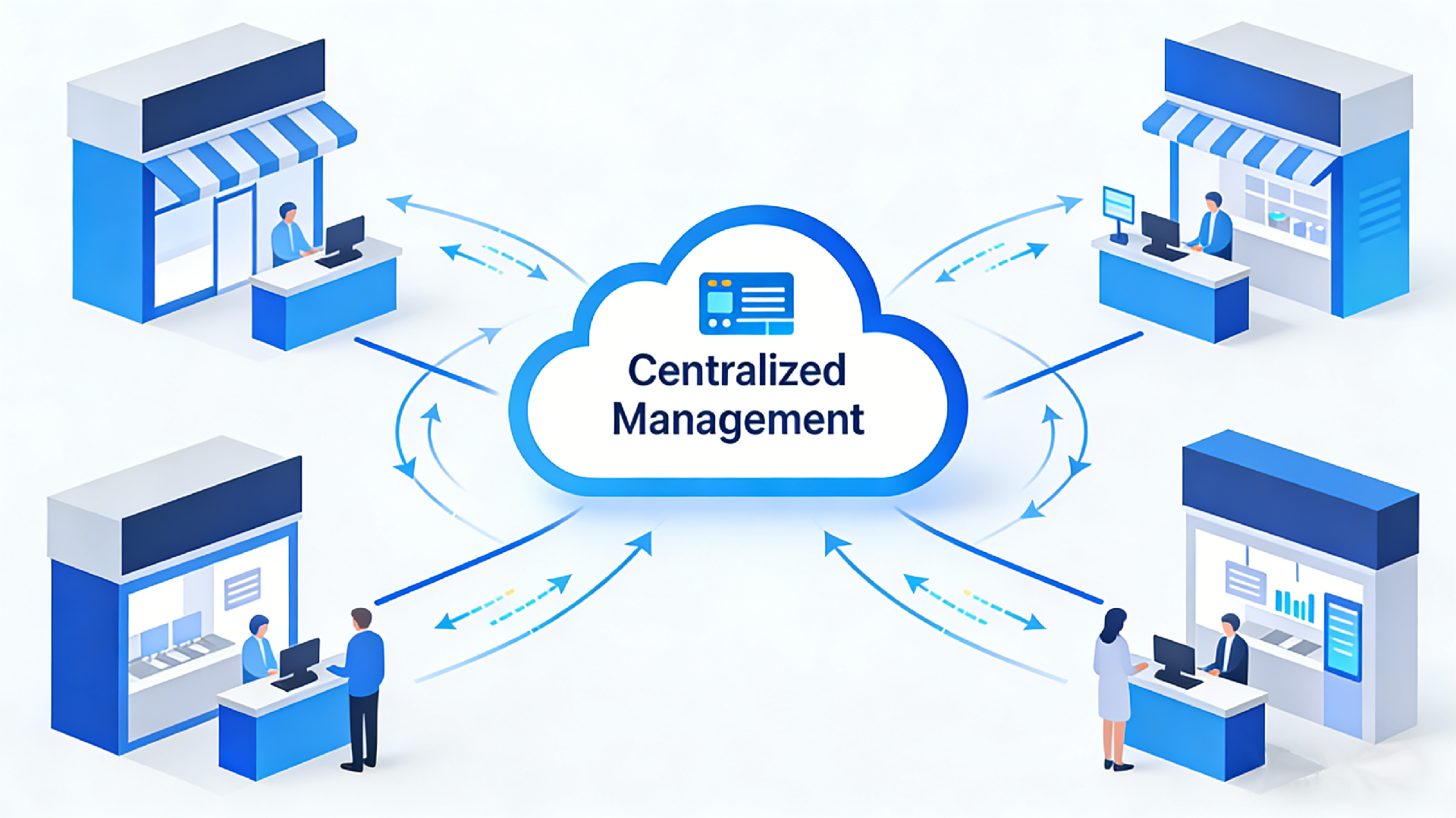
3. Shift from On-Site Configuration to Centralized Operations
Manual, on-site configuration does not scale efficiently.
A rethought connectivity model relies on centralized management, unified visibility, and policy-based control, enabling IT teams to deploy, monitor, and maintain networks remotely across regions.
4. Build Security into the Network Edge
Each distributed site represents a potential attack surface.
Rather than relying solely on centralized security infrastructure, modern architectures integrate security controls at the network edge, providing consistent protection regardless of location.
5. Optimize for Cost Efficiency Across the Network Lifecycle
Connectivity decisions affect not only initial deployment but long-term operations.
Future-ready designs focus on simplified deployment, reduced on-site intervention, and flexible connectivity options, helping organizations scale sustainably across geographies.
A Practical Framework for Distributed Network Design
Together, these principles form a practical framework for building agile, resilient, and manageable networks for distributed environments.
This shift is not about adopting a single technology. It is about rethinking how connectivity supports business operations at scale—from deployment and management to security and long-term efficiency.
As distributed operations continue to expand globally, organizations that rethink connectivity at the architectural level will be better positioned to support growth, resilience, and operational excellence.